

4th August 2026 · Blogs
We are well accustomed to the practice of a circular economy through our engineering of long-life lighting controls, designed for extended durability, and facilitating asset retrofitting over replacement to minimise electronic waste. To us, this framework takes precedence rather than the traditional linear economy of take, make, waste. And we see it beyond just the environmental benefits of reducing raw material use and cutting electronic waste but also the lower energy and maintenance costs it can deliver to our customers.
A circular economy directly drives green economic growth as, rather than raw material consumption it actively looks to foster the practice of reuse, repair and recycle. Which can lower carbon emissions, create sustainable jobs and boost resource efficiency.
The EU, in 2010 introduced the Circular Economy Action Plan which provides frameworks for businesses to design sustainable products, eliminate waste and incorporate recycled content. Highlighting that adopting a circular economy isn’t just good business practice but increasingly it’s being mandated by regulations.
Around the world, governments are implementing various regulations, so it’s good to check what your local environment dictates and those of any countries you export into.
For us, based in Ireland we follow the Irish Government as well as EU and UK policy.
Extended Producer Responsibility (EPR) schemes
Under EPR, producers are now more accountable for the entire lifecycle of products, including collection, reuse, repair, and recycling. In Ireland the EPR model has been used to develop six Producer Responsibility Initiatives (PRIs) for waste based on the producer pays principle. This is pushing Extended Producer supply chains to integrate circularity from the start.
Which means companies are adopting practices such as Digital Product Passports (DPPs) to track data on material composition, Design for Disassembly (DfD) where engineering and product development teams are restructuring product architecture so that they last longer and are easier to maintain and repair.
What we’re seeing globally is that countries are adapting elements of France’s Anti-Waste for a Circular Economy (AGEC), a comprehensive legislation designed to eliminate single-use plastics, address waste and improve product transparency, through legislation around e-waste and the right-to-repair. An example of which is the Ecodesign for Sustainable Products Regulation (ESPR), an EU law that sets rules to make most physical goods sold in the EU more durable, repairable and eco-friendly.
Further highlighting that linear consumption models are on the way out, and circular models are the future.
Here at Westire, we support a circular economy model through our design and manufacture of retrofittable long-life and energy optimising outdoor lighting controls.
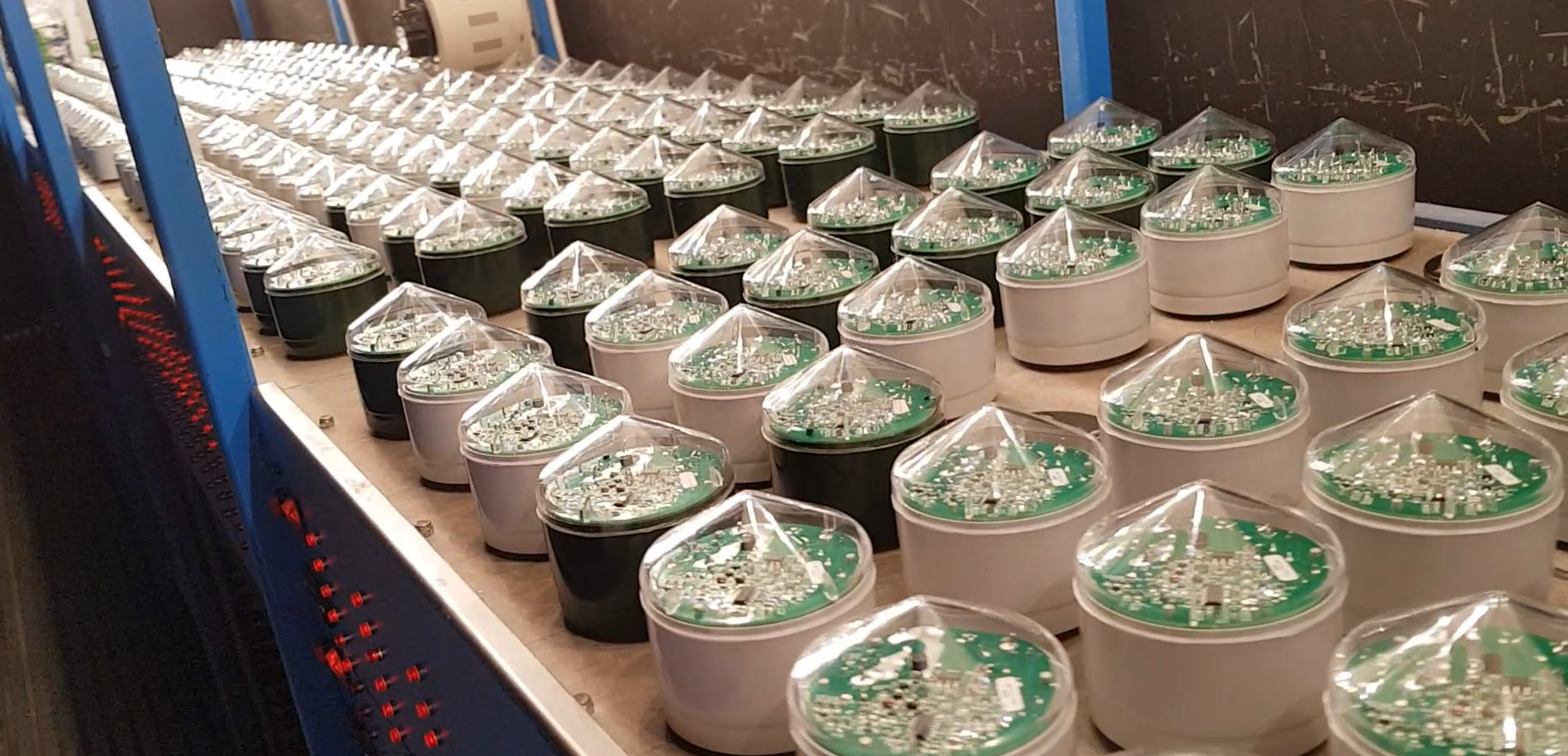
A prime example of our industry-leading approach to Fit & Forget® long-life photocells is our 8480 photocell. Initially designed and manufactured more than 40 years ago, it is still in use and meets the five core objectives of the AGEC:
- Eliminate waste and pollution at source
- Extend product lifespans through reuse, repair, and refurbishment
- Promote better consumer information and transparency
- Reduce plastic usage and packaging waste
- Support a circular, regenerative economy
To support the ability to extract value from existing assets, we have our RLD-3 DALI-1 Dimming Photocell, that enables retrofitting and adapting older streetlighting to be ready for the smart cities of the future. Read more in our blog here.
And talking about smart cities, our Power Taps support the powering of additional smart-city hardware such as CCTV, Wi-Fi and other connected IoT devices. Whilst our Wi4B Westire iLCS Smart City CMS Platform is revolutionising urban lighting, reducing energy consumption and enhancing safety. And it provides greater insight to municipalities to support their activities to enhance efficiency, sustainability, and resource allocation.